
How a mechanical contractor reduced reporting time by 70%
How one mechanical contractor rolled FieldGrid out across 12 active projects, and what changed for its crews, PMs and clients.

- 70%
- less time on daily reporting
- 12
- active projects on one record
- Same day
- reports, across every crew
About the team
This mechanical contractor runs commercial HVAC installation, building controls and planned service work across a mix of new-build and occupied sites. At the time they started with FieldGrid they had twelve active projects, a handful of service contracts, and crews split between installation, commissioning and maintenance.
Like many growing contractors, their processes had grown with them rather than being designed. Each project manager had their own spreadsheet, each foreman had their own way of reporting, and the operations lead spent a large part of every week trying to piece together a consistent picture.
The challenge
The most visible problem was the end of the day. Foremen were spending forty minutes to an hour typing up reports, often at home in the evening, working from memory and a camera roll full of unlabelled photos. Reports arrived late or not at all, and the detail varied a lot from crew to crew.
Behind that was a bigger issue. Project managers often learned about blocked work days after it happened. A missing part noted on a paper checklist on Tuesday might not reach the office until Friday. Commissioning sheets lived in binders, so proving that a unit had been tested meant digging through folders in the site office.
“We had plenty of information. We just never had it in the right place at the right time.”
What they did
Rather than rolling out across the whole company, the team started with a single installation crew and one form: the daily log. The foreman on that crew was well respected and willing to give honest feedback, which made a big difference to how the rest of the field team responded.
- Weeks 1 to 2: the pilot crew filed daily logs in FieldGrid with photos and voice notes. Alex turned each day’s updates into a written summary for the PM.
- Weeks 3 to 4: commissioning checklists were rebuilt from the existing paper sheets, with photo steps at the points that mattered for handover.
- Weeks 5 to 6: the remaining crews came on board, introduced by the pilot foreman on their own sites rather than in a training room.
Two settings made adoption easier. First, the mobile app saved everything offline, which mattered on rooftops and in basement plant rooms. Second, failed checklist items automatically opened an issue with an owner, so crews could see that problems they raised led to action.
Changing how the office worked
The project managers changed their habits too. Instead of calling foremen for updates, they reviewed the morning summary from Alex and replied to questions as comments on the report. Issues were reviewed in a short slot twice a week rather than in a long Friday meeting.
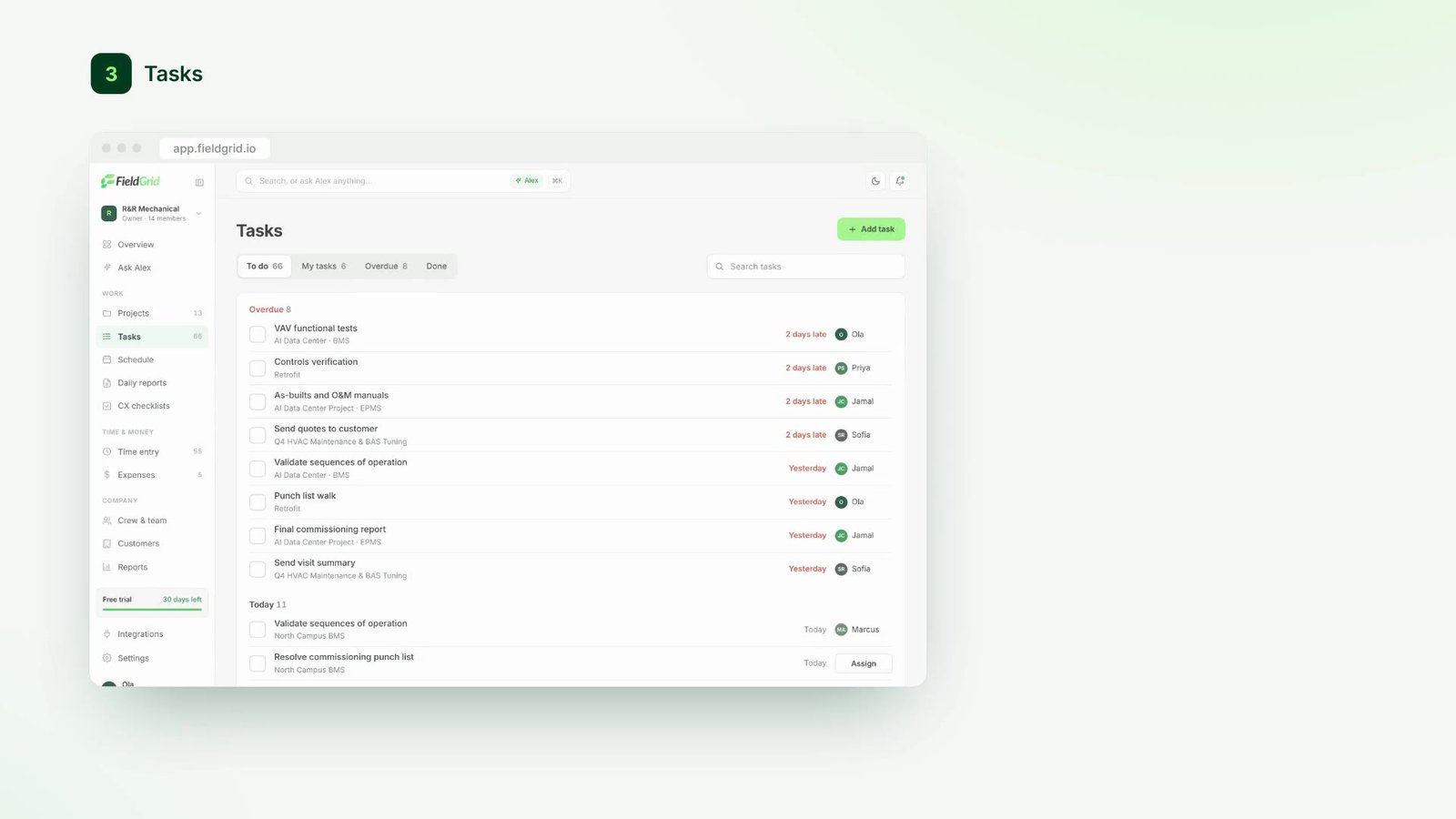
The operations lead built a single dashboard showing progress, open issues and reporting status across all twelve projects. For the first time, every site was measured the same way.
The results
After six weeks, every crew was reporting in FieldGrid and the paper forms were retired. Over the following quarter, the team saw clear changes:
- Daily reporting time dropped by around 70%, from close to an hour to under fifteen minutes for most foremen.
- Reports arrived the same day from every crew, instead of trickling in over the week.
- PMs saw blocked work the morning it happened, often in time to reschedule a crew instead of losing a day.
- Commissioning records for handover were complete and searchable, with photos tied to each test.
“Our foremen stopped doing paperwork at 9 p.m. That alone paid for it.”
What they would tell other contractors
Asked what made the rollout work, the team pointed to three things. Start small with a crew that wants to try it. Make the first form genuinely faster than paper. And make sure the office responds to what the field reports, so crews can see the point.
They also warned against keeping paper forms around as a backup for too long. Once the digital process was working, removing the old forms was what finally made it the default.
What’s next
The team is now connecting FieldGrid to QuickBooks so job costs stay current without re-entering expenses, and sharing progress photos with clients directly from the project record. They are also extending the same checklists to their service contracts, so each piece of equipment builds up a full history over time.