
5 ways top contractors keep projects on track
From better communication to real-time data, here’s what high-performing field teams do differently, and how to copy it.
What high performers do differently
Every contractor deals with late deliveries, weather, design changes and the occasional difficult client. The difference between teams that finish on time and teams that are always firefighting is rarely luck or talent. It is a handful of habits that help them see problems earlier and respond faster.
We looked at how our most consistent customers run their projects. Five patterns came up again and again.
1. They report the same day, every day
Delays rarely come out of nowhere. They show up first as a line in a crew’s notes: a missing part, a blocked area, an inspection that did not happen. When that note is filed the same day, the project manager has a head start of days rather than hours.
Top contractors make same-day reporting non-negotiable, and they make it easy. Reports are short, structured and quick to complete from a phone, with photos and voice notes instead of long paragraphs. The rule is simple: the report is done before the crew leaves site.
They also make sure reports are read. A foreman who never gets a reply stops putting effort into the details. A foreman who sees issues picked up the same afternoon keeps reporting them.
2. They treat photos as records
A timestamped photo tied to the right task settles more disputes than any email thread. It shows the condition of the work before it was covered, the damage that was already there when the crew arrived, and the completed installation the client is questioning.
The best teams build photos into the workflow rather than leaving them to chance. Checklists ask for a photo at the steps that matter. Issues cannot be closed without one. And photos live in the project record, not on personal phones where they disappear when someone changes devices or leaves the company.
3. They watch the signals, not just the deadline
By the time a deadline is missed, it is too late to do much about it. High-performing teams track the leading signals that predict trouble:
- Tasks that are overdue or have not moved in several days.
- Budgets or labour hours running ahead of progress.
- Crews or sites that have not filed today’s report.
- Issues that have been open longer than usual.
- Dependencies, like inspections or deliveries, that are not confirmed.
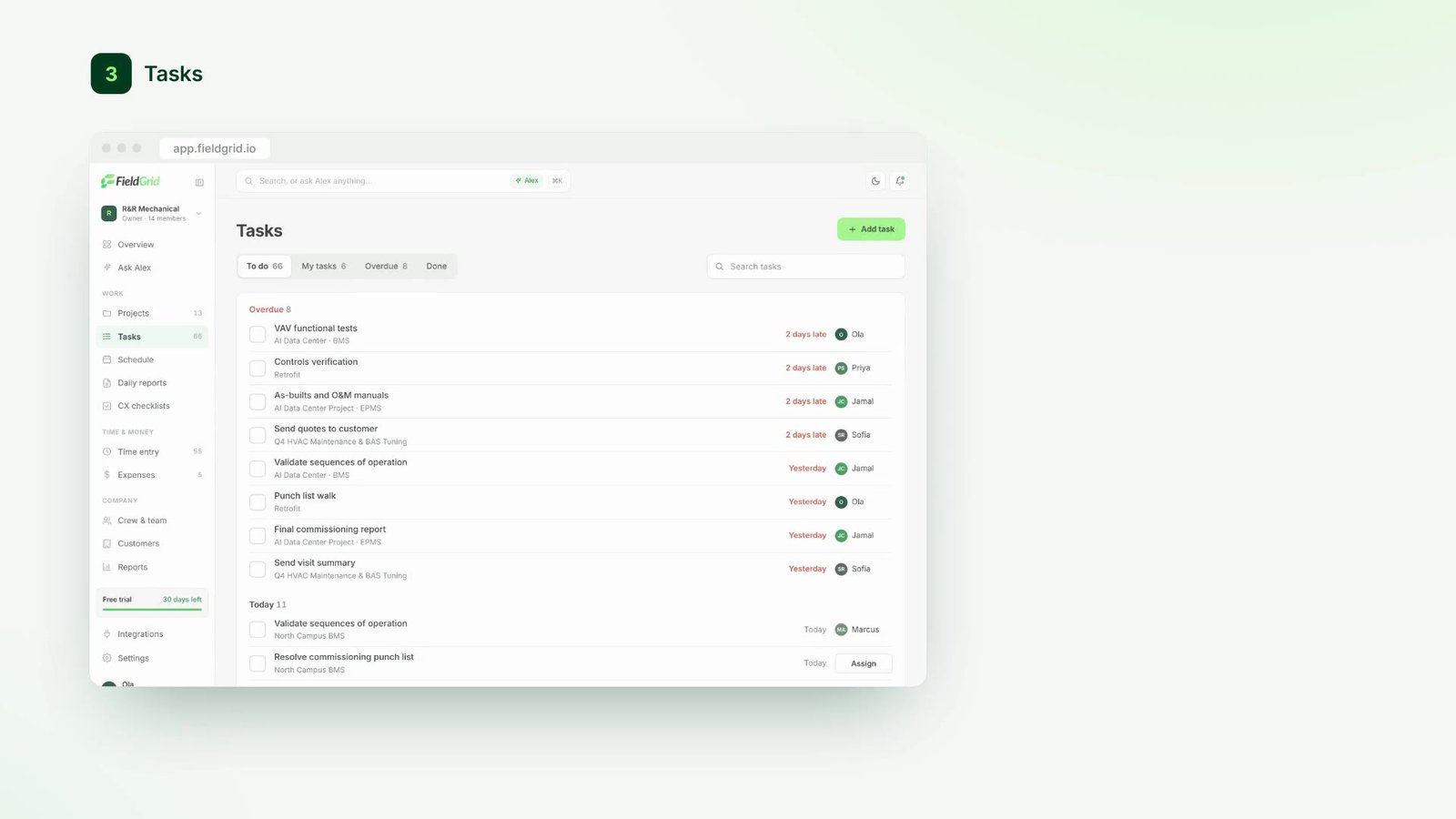
They review these signals regularly and act while problems are still cheap to fix. Tools like Alex in FieldGrid help by watching these patterns across every project and flagging what is drifting, with links to the updates behind each warning.
4. They close the loop on every issue
An issue that is logged but never resolved can be worse than one that was never logged at all, because everyone assumes someone else is handling it. High performers assign every issue an owner and a due date, and they do not close it without evidence.
They also keep the list short and visible. Open issues are reviewed in a quick standing slot, not saved up for a long weekly meeting. Anything stuck for more than a few days gets escalated rather than quietly ignored.
The difference between a good month and a bad one is usually how early the team found out.
5. They give everyone the same picture
When crews, project managers, operations and clients each work from different information, a lot of time goes into reconciling it. Which version of the schedule is current? Did the client approve that change? Was the inspection passed or just booked?
Top contractors work from one live record that everyone can see, with the right permissions. There is less to argue about and less to re-explain, and when plans change, everyone sees the change at the same time. That shared picture is what keeps a project moving when things inevitably shift.
How to put this into practice
You do not need to adopt all five habits at once. Start with same-day reporting on one project, since it feeds every other habit on this list. Once reports are flowing reliably, add photo requirements to your key checklists, then start a short twice-weekly review of open issues and warning signals.
Within a couple of months, most teams notice the difference in how calm their project managers are on a Friday afternoon. That is usually the best sign that problems are being found early enough to fix.